LOG 003 · Closing the Cordwood-to-48V Fuel Loop
Two-stage batch pyrolysis decouples char making from engine fueling, eliminating tar buildup before the 48V DC generator.
 TimberVolt
Follow the Build ↓
TimberVolt splits off-grid wood energy into two simple machines: TimberKiln 25 turns cordwood into hydronic heat and dry charcoal; TimberGen 5 turns that clean charcoal into 5.0 kW of 48V DC power.
LOG 003 · Closing the Cordwood-to-48V Fuel Loop
Two-stage batch pyrolysis decouples char making from engine fueling, eliminating tar buildup before the 48V DC generator.
LOG 002 · 94 OCCT-Validated Parametric CAD Parts
Full-scale TimberKiln 25 and TimberGen 5 assemblies verified for zero interferences and shop-ready fabrication drawings.
3 VERIFIED STAGE 1 ENTRIES · BENCH TEST LOGS BEGIN AT LOG 004
Making clean charcoal from split firewood is only half the fuel problem. Raw retort charcoal comes out as brittle irregular chunks mixed with abrasive carbon dust. Load oversized logs into a compact updraft gasifier and the bed bridges; load fine dust and pressure drop spikes across the filter bags.
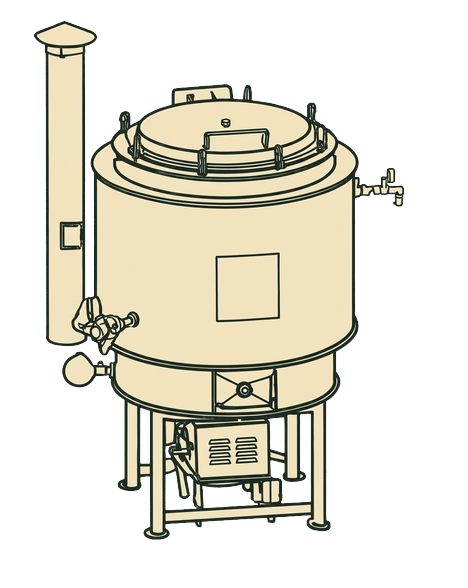
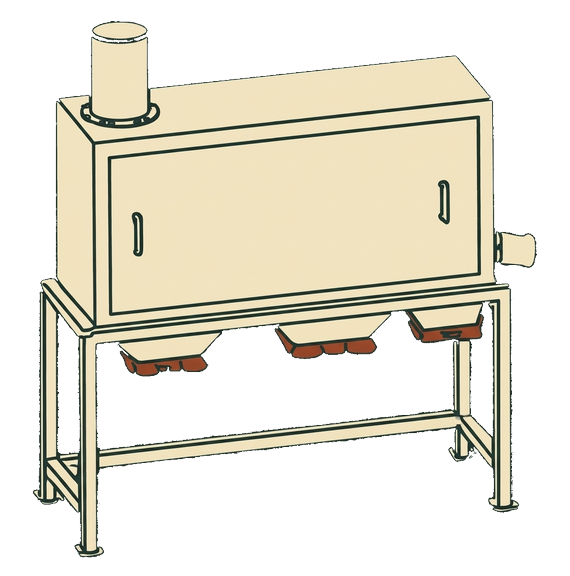
To keep the whole workflow clean and repeatable at residential scale, TimberKiln 25 integrates a sealed 0.75 kW 48V DC dual-roll mini-crusher (30–45 RPM, 14 mm nominal nip gap) and a 60 RPM 2-stage inclined rotary trommel directly beneath the retort's bottom dump gate. Once anaerobic cooldown drops core temperature below 100 °C, a 48V micro-cyclone pulls negative pressure while cooled logs shear cleanly into three sealed wheeled bins: ~24 kg of uniform 6–15 mm engine-grade fuel nuggets, ~3 kg of <2 mm biochar soil fines, and ~1 kg of oversize chunks recycled on the next batch.
That single 110 kg split cordwood batch delivers roughly 70–90 kWhth into a home hydronic glycol loop during pyrolysis, and leaves behind enough dry, storable, tar-free charcoal to run TimberGen 5 at 5.0 kW net 48V DC (96 A @ 52 V DC) for ~6.0 hours whenever grid power goes dark.
Before cutting a single sheet of 304SS or casting the alumina firepot liner, every subassembly on both machines was authored in parametric Python FreeCAD and checked with OpenCASCADE BRep/BOP boolean interference verification. Across the full two-unit platform, all 94 solids (62 parts on TimberGen 5 and 32 parts on TimberKiln 25) pass geometry checks with 0 intra- or cross-subassembly overlaps across 6,517 solid-pair tests.
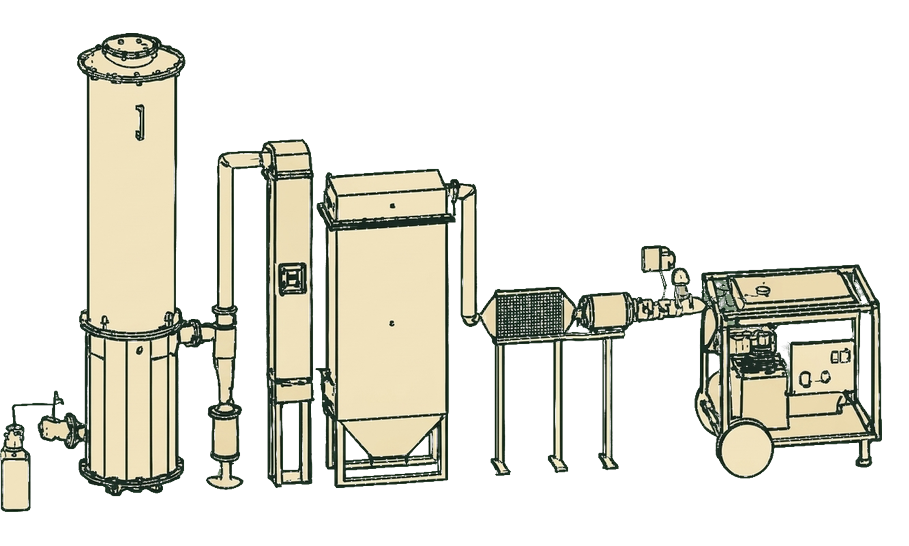
Two mechanical details drove most of the Stage 1 CAD refinement. On TimberGen 5, the 16 mm ID silicon-carbide (NBSiC) air/steam nozzle sits inside a floating stuffing-box gland with 4.0 mm radial clearance and Belleville disc springs so thermal expansion against hot steel never cracks the ceramic tube. Downstream, gas passes through a 78 mm Stairmand hot cyclone (d50 ≈ 2.6 μm), a PWM Stage 1 pre-cooler holding 120–140 °C into dual Size #2 Nomex bags, and a Stage 2 bar-and-plate intercooler delivering dense syngas below 50 °C to the 459cc engine.
Closed-loop operation is governed by an ESP32-S3 controller running a Bosch LSU 4.9 Lambda PID (λ = 1.02) on the V_air stepper valve, metered P_h2o water drip (8.5–14.2 mL/min) to hold core temperatures cleanly at 1,000–1,150 °C without slagging, and an independent hard-wired CO_Loop NC safety relay that grounds engine ignition immediately at ≥ 35 ppm ambient CO.
Anyone who has researched off-grid wood power during Pacific Northwest winter storms or Cascadia earthquake resilience planning quickly hits the same engineering wall: raw wood gasifiers make sticky condensable tar. Burning raw split firewood directly inside a single-vessel downdraft gasifier requires drying moisture, cracking heavy pyrolytic vapors, and matching engine suction load all at the same instant. One damp piece of fir or a brief low-load idle drops hearth temperature and coats engine intake valves in black pitch.
TimberVolt solves the tar problem by refusing to do both chemical jobs in one vessel. Instead, the platform splits wood energy into two purpose-built outdoor units connected by clean, dry, indefinitely storable lump charcoal:
TimberKiln 25 handles messy raw cordwood (15–25% moisture, up to 30% max). Pyrolytic tars vent downward into an 800–1,000 °C secondary firebox where they burn completely to heat your home's hydronic storage tank: leaving zero tar behind in the 332 L stainless retort. Later, whenever battery banks drop during a multi-day outage, TimberGen 5 burns only dry 6–15 mm charcoal nuggets with metered steam injection to produce clean CO + H2 gas for a 459cc generator and 48V DC charger.
LOCAL WINTER POWER · OFF-GRID & EXTENDED OUTAGES
Living off-grid through a northern winter — or riding out a major earthquake or storm that cuts off fuel deliveries for weeks — comes down to the same question: how do you make reliable power from something already in your backyard?
A standard gas or diesel generator gets you through a weekend. Once highways close, fuel stations lose power, or weeks of dark winter cloud set in, you need a truly local fuel that doesn’t wait on supply chains or bright summer skies.
COMMON LOCAL POWER OPTIONS AT NORTHERN LATITUDES
Most backup and off-grid power systems work wonderfully in the right season or location. Over dark northern winters — or during multi-week supply disruptions — each hits a real limit right when demand is highest.
CORDWOOD AS SOLAR’S WINTER PARTNER — OR A STANDALONE LIFELINE
Across British Columbia and northern regions everywhere, immense forests are right outside the door. Storm windfall, cleared trees, and ordinary split firewood aren’t just for heating a cabin — they are a dense, local fuel that fills the exact winter gap where solar goes quiet.
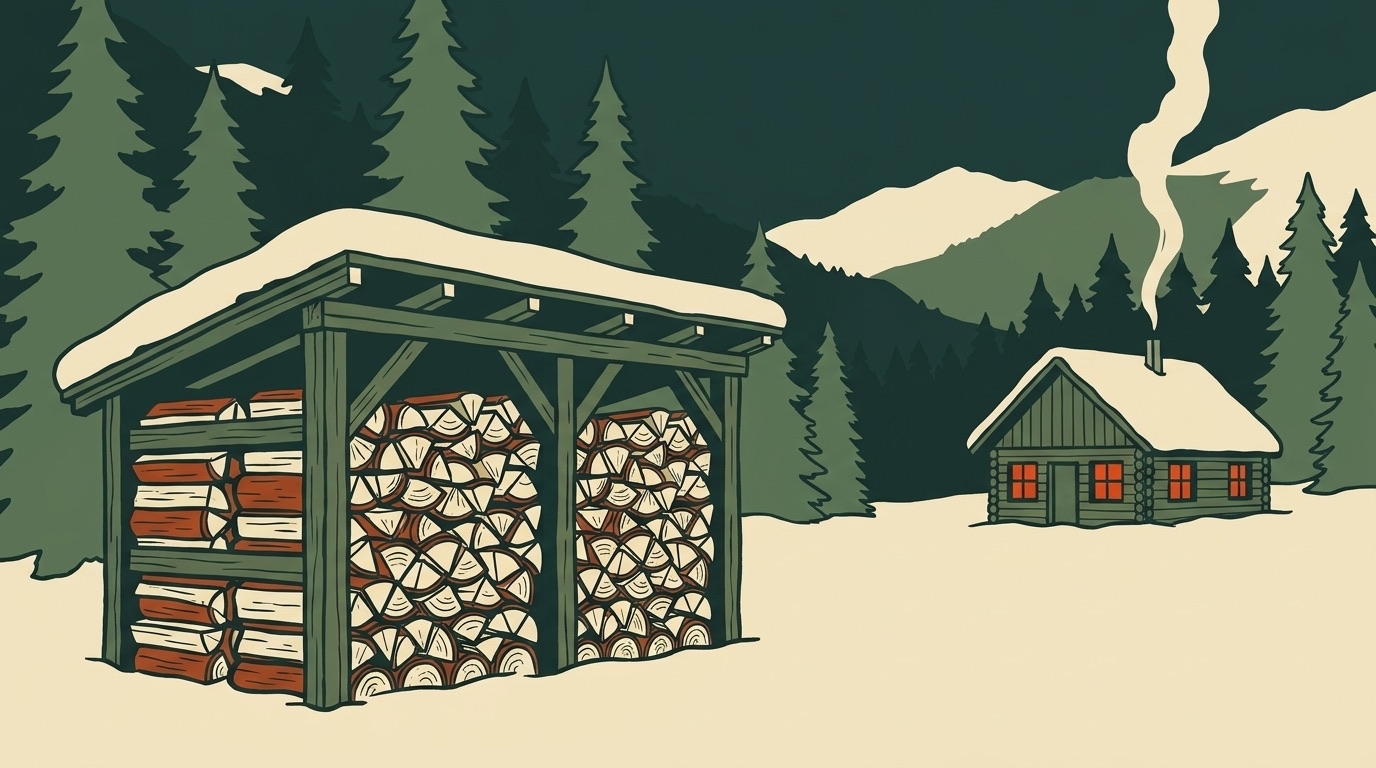
A modest woodshed holds far more energy than an affordable battery bank — and kept dry, firewood won’t go stale for years.
Pitch-black at 4:30 p.m. after two straight weeks of coastal rain or snow? Cordwood delivers the exact same energy in January as in July.
In a northern winter, keeping your home warm matters just as much as keeping the lights on. Wood naturally gives you both.
WHY MOST BACKYARD WOOD-TO-POWER APPROACHES STALL
Turning wood into electricity isn’t a new idea — but the traditional ways of doing it at home scale all run into practical roadblocks:
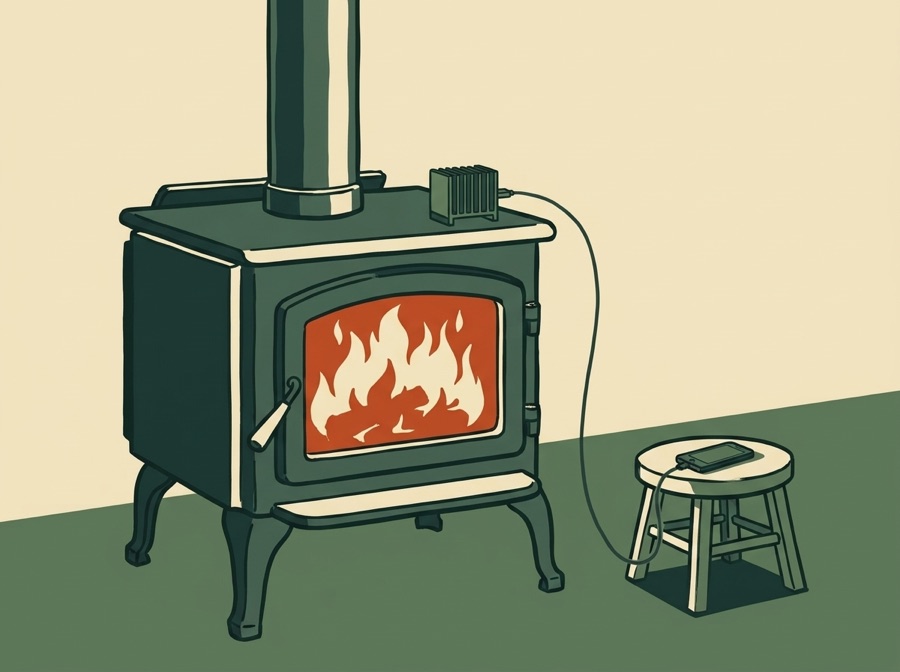
Clever, silent, and great for topping up phones or running a few LED lights — but they only produce a tiny trickle of electricity, nowhere near enough for a fridge, well pump, or home battery bank.
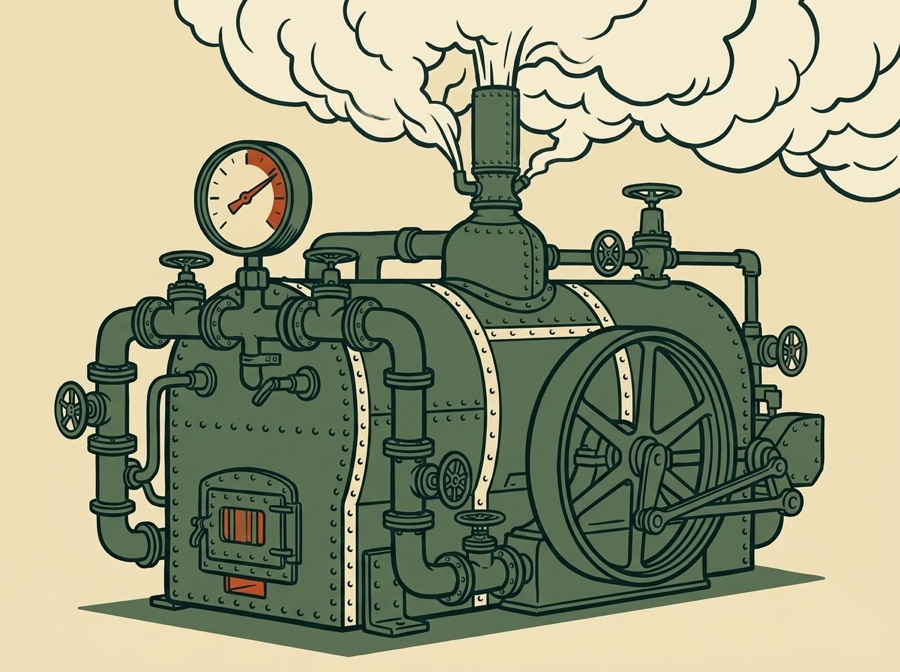
Heavy, pressurized, water-hungry, and high-maintenance. Managing live steam pressure safely and efficiently at home scale is a full-time job of its own.
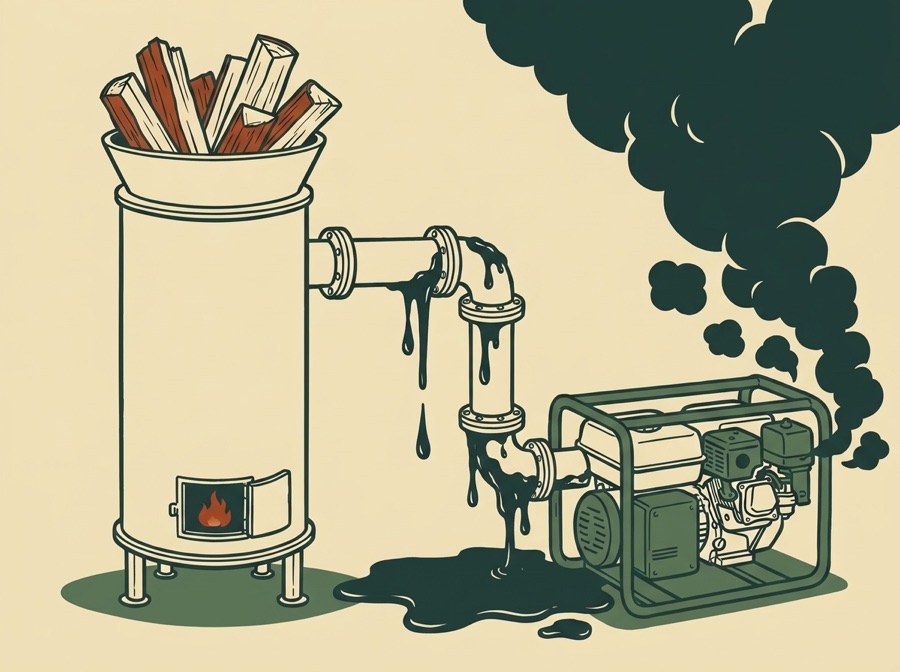
Burn raw firewood directly to feed a running engine inside one machine. Raw wood is full of moisture and sticky natural tar — one damp log or a dip in power load lets black pitch slip through and gum up the motor, leaving you babysitting the machine.
ORDINARY FIREWOOD → HOME HEAT + DRY CHARCOAL → CLEAN POWER
Instead of forcing one finicky machine to juggle wet firewood and clean engine power at the same time, TimberVolt separates them into two simple outdoor units linked by clean, dry lump charcoal.
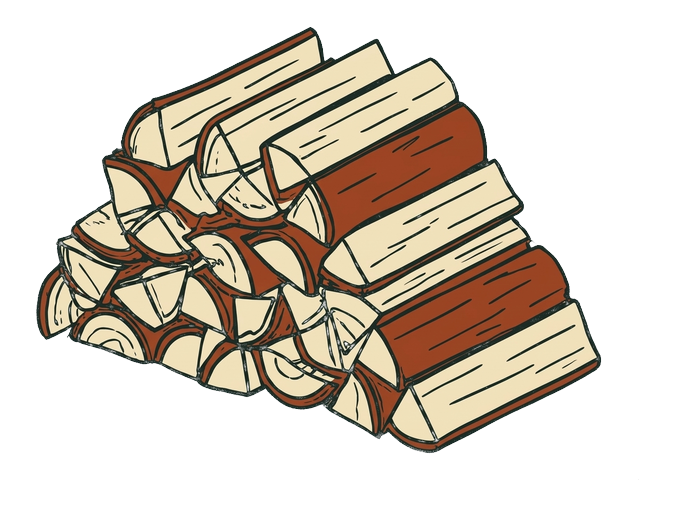
Load ordinary split firewood — no wood chipper or pellet maker needed. TimberKiln gently bakes the logs into dry lump charcoal while cleanly burning off all the smoke and sticky tar to deliver a full batch of usable home heating.
Zero waste: Even the leftover fine charcoal dust goes straight into the garden as biochar.
Whenever your batteries run low — next Tuesday or six months later during a winter blackout — pour in a load of dry charcoal. Because the sticky tar is already gone, TimberGen charges a home battery bank cleanly at serious household power.
No babysitting: Built to top up a home battery bank smoothly alongside solar or on its own.
VERIFIED FREECAD OCCT ASSEMBLIES SHOWN WITH 5′10″ (1.78 M) SCALE FIGURE
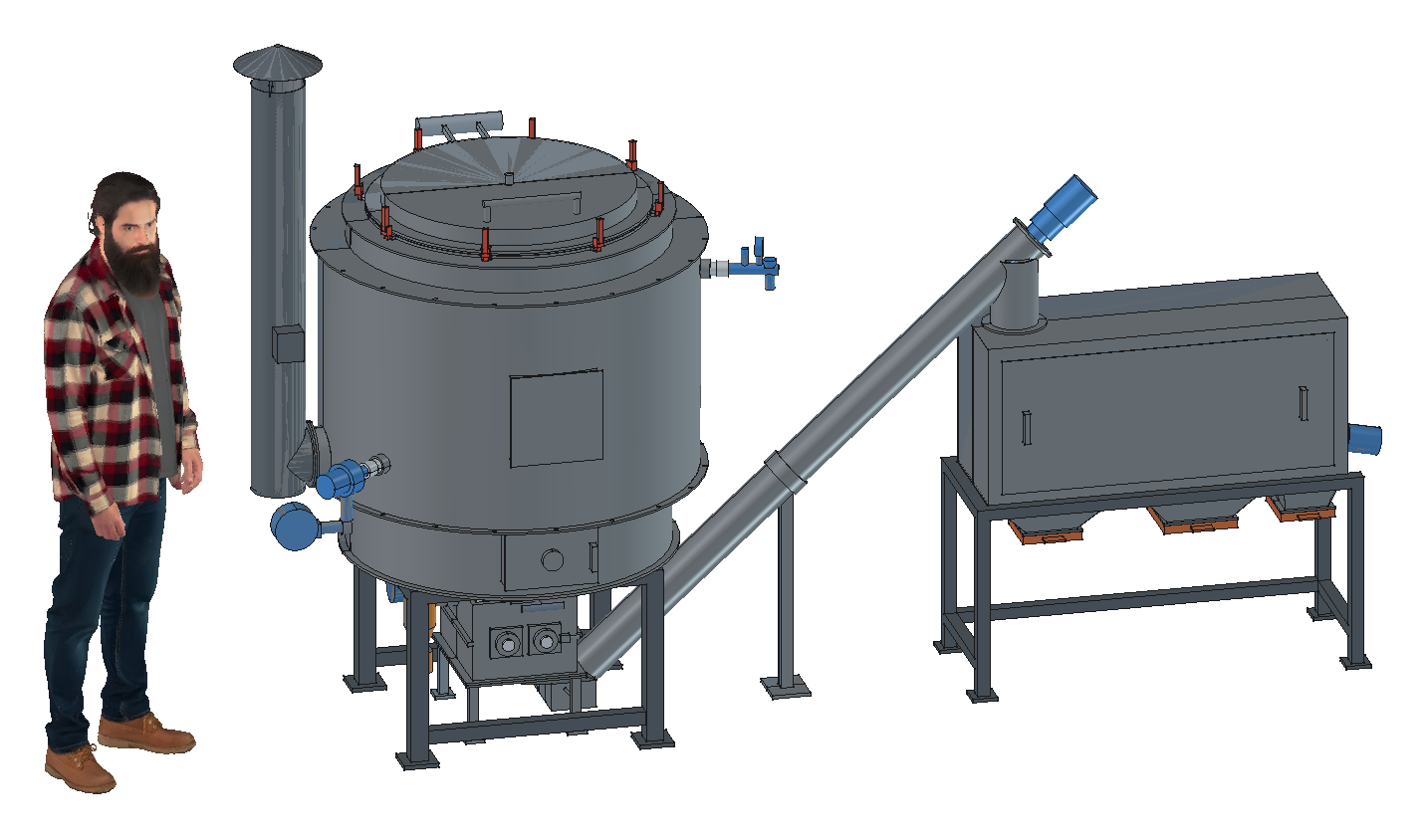
Vertical 332 L 304SS batch pyrolysis retort wrapped in a 14.5 m spiral-finned hydronic heat exchanger, stacked directly over an enclosed dual-roll crusher, 2-stage rotary trommel, and three sealed wheeled totes.
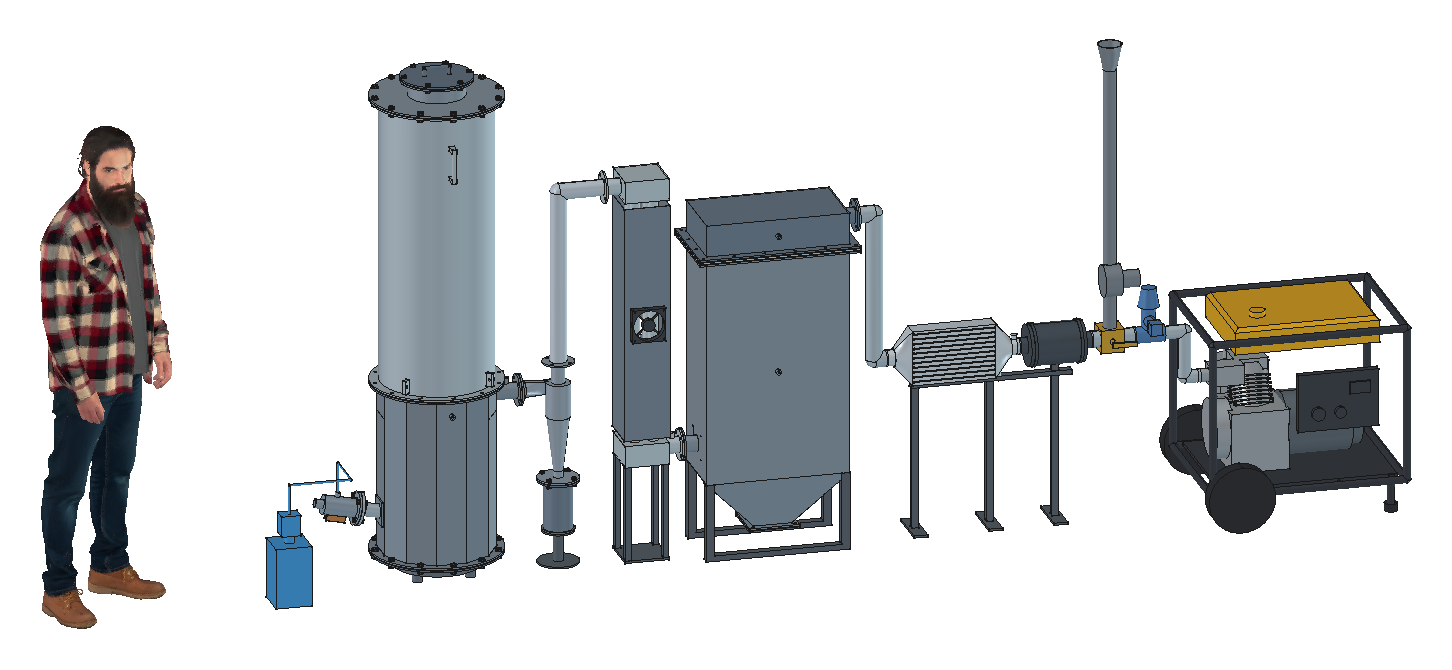
Updraft charcoal gasifier with a sealed 132 L gravity-fed quick-swap cartridge (200 mm reload dock, zero moving feeders), 16 mm ID floating NBSiC ceramic nozzle, steam pre-chamber, 78 mm Stairmand hot cyclone, Stage 1 PWM cooler, dual Size #2 Nomex baghouse, Stage 2 intercooler, and 459cc 48V DC charger train.
PROTOTYPE BENCH MULE STATUS · NO COMMERCIAL CLAIMS
LOG 004.